In the early days Bob started out by cutting the rough shapes of decoy bodies from blocks of wood with his bandsaw. He would then refine the shape with his dremel tool. After joining the head and giving it a final sanding, he would woodburn the feathers onto the body. He made many decoys and songbirds in this way and the woodburning gives the decoy a beautiful texture and reality; however, it was tedious and time-consuming! Here is an example of a woodburned wood duck.
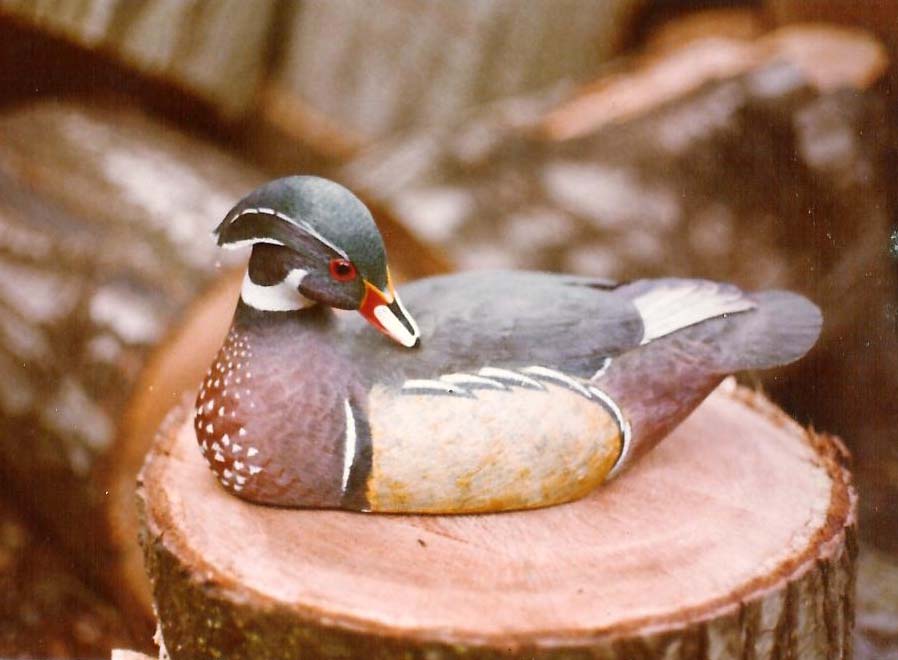
The eyes are glass, carefully inserted. He even used putty to form the eyelids around the eyes on some birds. After woodburning, Alma applied many “washes” (diluted paint) to build up the color so that the paint would blend naturally and not cover up the feathers Bob took so much time to create. Wood ducks are beautiful but were a long project to paint, with all of their different-colored plumage! Later on, after meeting his friend Milton Watson, Bob decided to switch to smooth-bodied decoys and he put away the woodburning tool.


 Duck Duck Goose